

Why Apple’s Smart Glasses Will Transform Industrial Operations (And How to Prepare Your Systems)
Apple’s reported testing of four different frame designs for smart glasses ahead of a 2027 launch isn’t just another consumer tech story. This represents the beginning of a fundamental transformation in how industrial operations, field service teams, and manufacturing environments will function. When the world’s most influential hardware company commits to wearable computing at this scale, it signals that augmented reality interfaces are moving from science fiction to business reality.
The implications extend far beyond entertainment or social media applications. Industrial environments, construction sites, manufacturing facilities, and field service operations stand to benefit most from hands-free, contextual computing interfaces. We’re looking at the potential elimination of the constant device juggling that currently defines technical work: no more switching between tablets, smartphones, printed manuals, and diagnostic tools while trying to solve complex problems in real time.
The Current State of Industrial Computing Interfaces
Today’s industrial workers operate in a fragmented digital environment. A field technician troubleshooting HVAC equipment might simultaneously reference a tablet with system schematics, use a smartphone for communication with dispatch, consult printed maintenance logs, and operate specialized diagnostic hardware. Each context switch represents lost time, increased error potential, and cognitive overhead that reduces overall efficiency.
Manufacturing floor supervisors face similar challenges. Production metrics live in one system, quality control data in another, maintenance schedules in a third. Equipment operators need to physically move between workstations to access different information systems, creating bottlenecks in decision making and response times.
Construction project managers currently carry multiple devices to job sites: ruggedized tablets for blueprint access, phones for crew communication, separate devices for equipment monitoring, and paper backup systems for critical documentation. This multi-device reality creates constant friction in information access and collaboration.
Why Smart Glasses Will Succeed Where Previous Attempts Failed
Previous attempts at industrial wearable computing, including early Google Glass implementations and Microsoft HoloLens deployments, faced significant adoption barriers. Battery life remained inadequate for full shift use, processing power limited real-time applications, and most critically, software ecosystems remained fragmented and incomplete.
Apple’s entry changes this equation fundamentally. Their ecosystem approach means smart glasses won’t launch as standalone devices requiring separate app development and data integration efforts. Instead, they’ll integrate seamlessly with existing iPhone and iPad workflows that industrial companies already use. The development infrastructure, user authentication systems, and data synchronization frameworks already exist.
The four frame designs Apple is reportedly testing suggest they understand that industrial adoption requires different form factors than consumer applications. Construction workers need impact-resistant designs, manufacturing technicians require chemical-resistant materials, and field service teams need extended battery life for full-shift operation.
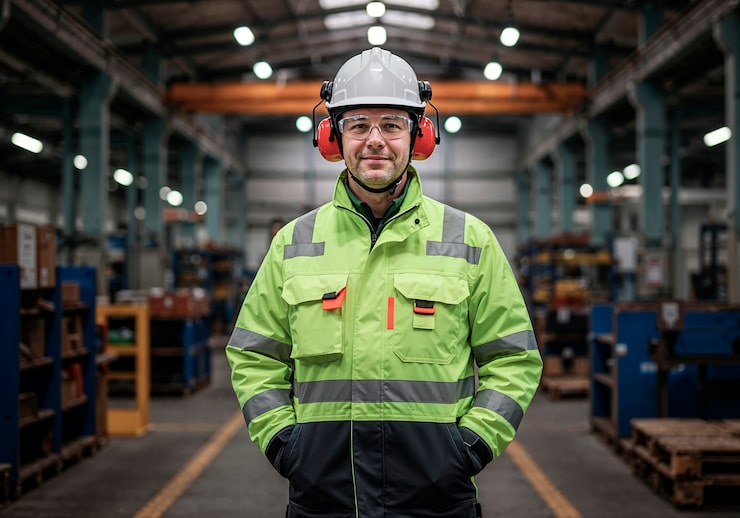
Real-World Applications Across Industrial Verticals
Manufacturing and Quality Control
Smart glasses will transform quality control processes by overlaying acceptable tolerance ranges directly onto manufactured components. Inspectors can see real-time measurements, historical defect patterns, and corrective action recommendations without looking away from their work. Production line workers can receive immediate feedback on assembly procedures, reducing training time and error rates.
Inventory management becomes dramatically more efficient when warehouse workers can scan items simply by looking at them, with stock levels, location data, and picking instructions appearing in their field of vision. No more handheld scanners, paper pick lists, or constant trips to computer terminals.
Field Service and Maintenance
Field technicians troubleshooting complex equipment can access equipment history, diagnostic codes, and step-by-step repair procedures while keeping their hands free for actual repair work. Remote experts can share the technician’s view and provide real-time guidance, effectively putting senior expertise on every service call.
Predictive maintenance becomes more actionable when equipment operators can see real-time sensor data, trend analysis, and maintenance recommendations overlaid directly on the equipment they’re monitoring. Instead of interpreting dashboard alerts later, they can address issues immediately based on contextual information.
Construction and Project Management
Construction supervisors can view 3D building information models (BIM) overlaid on actual construction progress, identifying discrepancies in real time rather than during scheduled inspections. Project timelines, material delivery schedules, and crew assignments become accessible without leaving the work area.
Safety compliance improves when workers receive immediate alerts about hazardous conditions, required safety equipment, or procedural violations based on their current location and activity. Site-specific safety protocols can be reinforced contextually rather than through periodic training sessions.
The Software Infrastructure Challenge
The hardware capabilities of smart glasses represent only half the equation. The transformative potential depends entirely on the underlying software systems that can deliver contextual, actionable information to these new interfaces. This creates both opportunities and challenges for industrial organizations.
Off-the-shelf business software wasn’t designed for augmented reality interfaces. Enterprise resource planning systems, customer relationship management platforms, and industry-specific software solutions will require significant architectural changes to support real-time, contextual data delivery.
Moreover, the most valuable applications will be those that integrate multiple data sources into unified, contextually relevant displays. A field technician shouldn’t see separate screens for equipment history, current sensor readings, parts inventory, and service procedures. They need integrated information that combines all relevant data sources into actionable guidance.
Building Systems for the Augmented Reality Future
Smart organizations are already asking the right question: “What systems do we need to build now to be ready when our workforce expects augmented reality interfaces?” The answer involves several key architectural considerations.
Real-Time Data Architecture
Traditional batch processing and overnight data synchronization won’t support augmented reality applications. Workers need access to live sensor data, real-time inventory levels, and current project status. This requires event-driven architectures that can process and deliver information as it changes, not hours or days later.
Edge computing becomes critical for applications requiring immediate response times. Equipment diagnostics, safety alerts, and quality control feedback can’t depend on round-trip communication with distant cloud servers. Local processing capabilities must handle time-sensitive applications while maintaining synchronization with central systems.
API-First Development
Augmented reality interfaces will consume data through application programming interfaces (APIs) rather than traditional user interface screens. This means business systems must expose their functionality through well-designed APIs that support real-time queries, contextual filtering, and multiple simultaneous connections.
The APIs supporting smart glasses applications need to handle location-based queries, role-based access control, and dynamic content filtering. A maintenance technician’s view of equipment data should differ significantly from a supervisor’s view or an executive’s dashboard, even when looking at the same physical equipment.
Contextual Computing Capabilities
The most powerful augmented reality applications will understand context: where the user is located, what equipment they’re near, what task they’re performing, and what information is most relevant to their current situation. This requires sophisticated data integration and artificial intelligence capabilities.
Context-aware systems need to process location data, equipment identifiers, work order information, and user roles to determine what information should appear in the user’s field of vision. Too much information creates cognitive overload, while too little reduces the system’s value.

Security and Compliance Considerations
Augmented reality interfaces in industrial environments raise significant security and compliance challenges. Sensitive operational data, equipment specifications, and process information will be transmitted wirelessly to wearable devices worn by workers throughout facilities.
Data encryption becomes more complex when information must be processed locally for real-time display while maintaining synchronization with secure central systems. Traditional VPN-based security models may not provide adequate performance for time-sensitive augmented reality applications.
Compliance with industry regulations adds another layer of complexity. Manufacturing environments subject to FDA oversight, construction projects requiring safety documentation, and energy facilities with security clearance requirements need augmented reality systems that maintain audit trails and access controls.
Integration with Existing Industrial Software
Most industrial organizations have significant investments in existing software systems: enterprise resource planning platforms, computerized maintenance management systems, and industry-specific applications. Augmented reality initiatives must integrate with these existing systems rather than replacing them entirely.
This integration challenge requires careful planning of data models, user authentication systems, and workflow processes. Workers shouldn’t need separate logins for augmented reality applications, and data updates made through smart glasses interfaces should synchronize immediately with existing business systems.
The organizations that succeed in augmented reality adoption will be those that can seamlessly bridge their current software investments with new interface technologies. This requires custom integration work that understands both the existing system architectures and the requirements of augmented reality applications.
What This Means for Industrial Operations
Industrial companies that begin building augmented reality-ready systems now will have significant competitive advantages when smart glasses reach mass adoption. Early movers can optimize their data architectures, train their workforces, and refine their operational processes while competitors struggle to catch up.
The competitive differentiation won’t come from the hardware itself. Apple’s smart glasses will be available to everyone at similar pricing. The advantage will belong to organizations that have built the software systems capable of delivering superior augmented reality experiences to their workers.
This represents a fundamental shift from hardware-centric technology adoption to software-centric competitive advantage. The companies that win will be those that can transform their operational data into actionable, contextual information delivered through whatever interface technology emerges.
Building Your Augmented Reality Foundation
Preparing for the augmented reality future starts with assessing your current data architecture and identifying the systems that need to support real-time, contextual information delivery. This assessment should consider data quality, integration capabilities, and performance requirements for time-sensitive applications.
Successful augmented reality implementations require custom software development that understands both your industry’s specific requirements and the technical constraints of wearable computing platforms. Generic business software won’t provide the contextual intelligence needed for effective augmented reality applications.
The time to begin this preparation is now, well before mass market adoption creates urgent competitive pressure. Organizations that start building their augmented reality software foundation today will be positioned to capitalize immediately when the hardware becomes widely available.
Apple’s smart glasses launch in 2027 will mark the beginning of a new era in industrial computing, but the winners will be determined by the software systems being built today. The question isn’t whether augmented reality will transform your industry, but whether your organization will be ready to lead that transformation.
Most Read
-
 The Ultimate Guide to Business Automation: What is It, Why is it Important, How Does it Work?
-
Internet of Things (IoT): A Beginner’s Guide
-
ERP Systems: Everything You Need to Know
-
 Breaking Barriers: Supporting a More Inclusive Gaming Experience with Adaptive Gaming Controller
-
 Unlocking Knowledge: Navigating the Future of Education with AI in Learning Applications
 The Ultimate Guide to Business Automation: What is It, Why is it Important, How Does it Work?
  Internet of Things (IoT): A Beginner’s Guide
  ERP Systems: Everything You Need to Know
  Breaking Barriers: Supporting a More Inclusive Gaming Experience with Adaptive Gaming Controller
  Unlocking Knowledge: Navigating the Future of Education with AI in Learning Applications
 Related posts
Categories
- AI (2)
- Blockchain (1)
- Business Automation (1)
- Design (1)
- ERP (2)
- Firmware (2)
- IoT (2)
- Uncategorized (3)
- Web App (1)
