

Why Google and SpaceX want to put data centers in space, and what could stop them
An AI data center in orbit runs on nonstop sunlight and never pays a water bill to stay cool. Google and SpaceX have started talking about exactly that.
Whether it works comes down to four things they get right, and four things that could stop them.
Why this conversation is even happening
AI compute demand has hit four ground-level limits at once.
Power. The International Energy Agency projects data centers will roughly double their electricity consumption by 2030. Some regions are already operating without slack.
Water. Cooling consumes billions of gallons per year. Drought-prone counties in Arizona and Texas are pushing back on new data center water permits.
Land. Zoning fights are slowing builds in Northern Virginia, Phoenix, and Hillsboro, Oregon. Communities that welcomed data centers a decade ago are quieter neighbors today.
Grid stability. Some utilities are refusing new data center contracts because they can’t promise the load won’t destabilize the local grid.
When you can’t get more on the ground, you start looking up.
Four reasons it might work
1. The sun never sets in low orbit.
A satellite in a sun-synchronous orbit stays in sunlight 24/7. There’s no atmosphere or weather dimming the light, and Google estimates a panel in the right orbit can be up to 8 times more productive than the same panel on Earth, mostly because it almost never stops collecting. No night cycle means no battery storage to carry the load through the dark.
2. No water, no cooling towers.
A terrestrial data center spends almost as much power and water moving heat away from the chips as it does running them. In orbit there is no water bill, because there is no evaporative cooling. The trade is that a vacuum is an insulator, so heat can only leave by radiating into space, which is slow and needs huge radiator panels. It is a real saving on water, not a free lunch on cooling.
3. Laser links beat fiber-optic in a vacuum.
Data through glass fiber moves at about two-thirds the speed of light. Data through a vacuum moves at the actual speed of light. Connect a constellation of orbital data centers with laser cross-links, and you have the fastest planet-scale network ever built.
4. No land, no neighbors, no permits.
The local-government friction that delays terrestrial builds (zoning, water rights, community opposition to noise and grid load) doesn’t exist 500 kilometers up.
Four reasons it might not
1. Launch economics still don’t pencil out.
Even at SpaceX’s roughly $1,500-per-kilogram-to-orbit pricing for Falcon Heavy, a full data center weighs hundreds of tons. The launch alone runs into hundreds of millions of dollars before you’ve spent a dollar on servers. Starship pricing could eventually bring that down, but the economics don’t pencil out today.
2. You can’t physically touch the hardware.
On Earth, a failed drive is a 30-minute swap. In orbit, it’s either an irretrievable loss or a billion-dollar service mission. Reliability has to be orders of magnitude higher than current data-center hardware delivers.
3. Radiation breaks silicon faster than vacuum cools it.
Outside Earth’s magnetic field protection, cosmic rays cause both transient bit flips and permanent component degradation. Radiation-hardening adds weight, cost, and complexity. The same physics that makes Mars rovers hard makes orbital data centers harder.
4. The latency to users is still terrestrial.
A satellite in low orbit is 500 to 2,000 kilometers up. The round trip to it adds only a few milliseconds of pure travel time, but the satellite-to-ground link, routing, and processing stack on top of that. For applications where the speed advantage matters most (high-frequency trading, real-time AI inference), the user is still on the ground, and that ground link is the bottleneck.
So is this happening?
Probably not in the next five years. MIT Technology Review broke down the four engineering problems that still need to be solved before any of this leaves PowerPoint.
The interesting part isn’t whether Google’s specific plan ships. It’s that the constraints driving the conversation are real and immediate. Data center water use, power grid strain, and land scarcity are shaping where AI infrastructure can physically exist today, not in some future scenario. The next decade of cloud-region choice will be quietly determined by those limits.
Whether the answer is in space, or somewhere we haven’t named yet, is the open question.
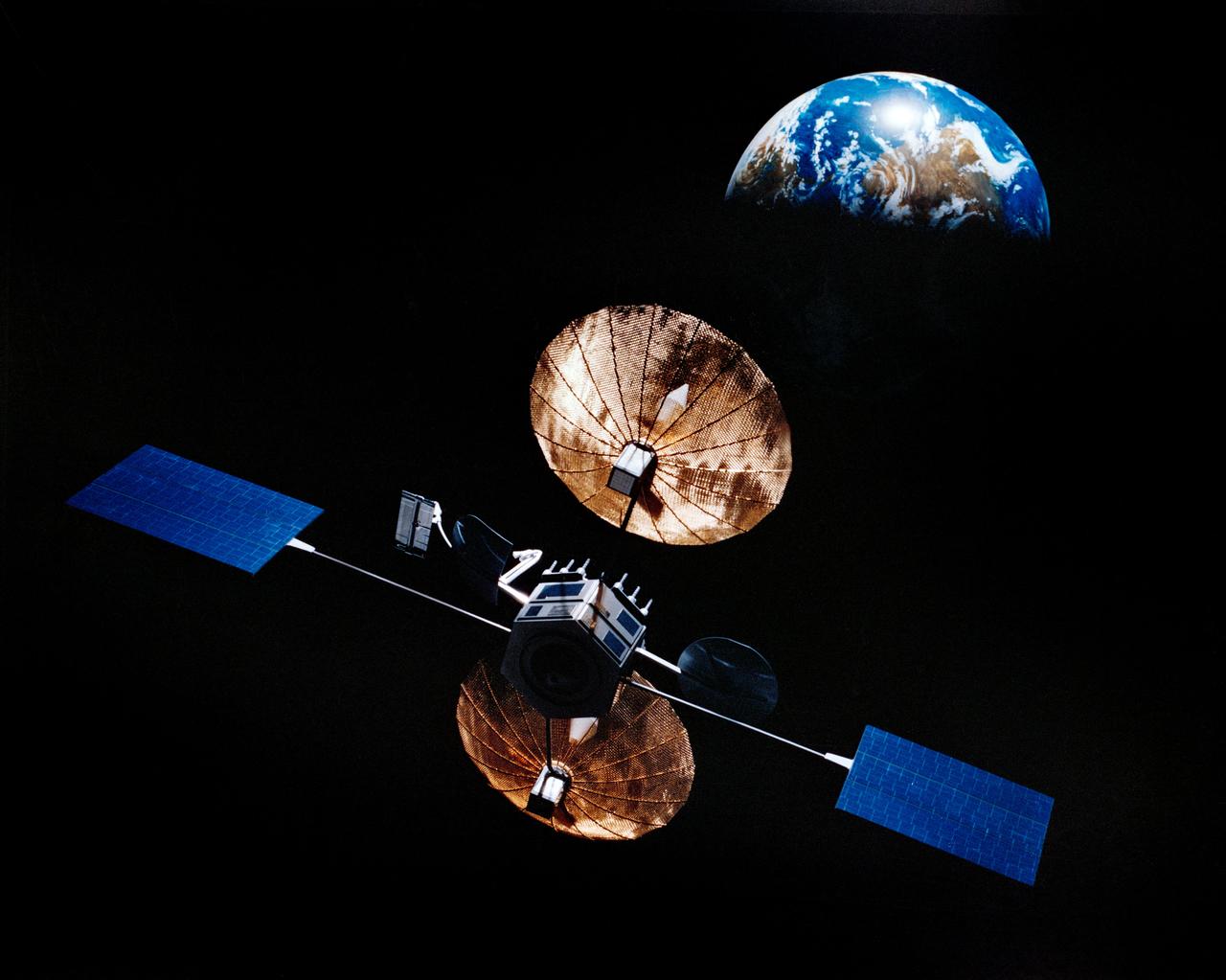
Images: NASA, public domain.
Most Read
-
 The Ultimate Guide to Business Automation: What is It, Why is it Important, How Does it Work?
-
Internet of Things (IoT): A Beginner’s Guide
-
ERP Systems: Everything You Need to Know
-
 Breaking Barriers: Supporting a More Inclusive Gaming Experience with Adaptive Gaming Controller
-
 Unlocking Knowledge: Navigating the Future of Education with AI in Learning Applications
 The Ultimate Guide to Business Automation: What is It, Why is it Important, How Does it Work?
  Internet of Things (IoT): A Beginner’s Guide
  ERP Systems: Everything You Need to Know
  Breaking Barriers: Supporting a More Inclusive Gaming Experience with Adaptive Gaming Controller
  Unlocking Knowledge: Navigating the Future of Education with AI in Learning Applications
 Related posts
 Unlocking Business Potential: How Amazon and Google Utilize Natural Language Processing Effectively
  Resource Management Reimagined: Empowering Construction Projects with Custom Solutions
 Categories
- AI (2)
- Blockchain (1)
- Business Automation (1)
- Design (1)
- ERP (2)
- Firmware (2)
- IoT (2)
- Uncategorized (3)
- Web App (1)
